Political Context for 15th Century English Literature: Kingship, Nobility & Power

The first part of the series The Political Context for 15th-century English literature focuses on Kingship, Nobility, and Power. The government in the post-Chaucer era was not an impersonal, independent machine that was indifferent to the king. Instead it was an extension of the English king’s judgement, whims, and will into the society. Gerald Harriss points out in Shaping the Nation: England, 1360-1461 that kingship was the core of the state, its authority remained uncontested, and its failure led to the disintegration of the political society.
The fortunes of a kingdom rose and fell with the ability of an individual whom the accident of heredity happened to produce. This is the very foundational context for understanding the political dimension of 15th-century England.
Monarchy
Its role and limits
A mixed monarchy
The 15th-century English king had no external legal check at all. Even though laws were made, and the taxes were granted with the assent of lords and commons, the authority that made and enforced that law remained royal authority. The king was sovereign.
However, sovereignty does not mean that the king was private or arbitrary. John Watts points out that the king was both private, as well as public. The royal office fused a private mortal individual with the public persona of the whole realm. The king’s declared will was not just his own; it belonged to the entire community he embodied. Watts insists that personal monarchy was a public, representative system. The centrepiece of 15th-century English political life was not an institution, a council, or a parliament, but a man: “It was the king, and the king in person.” (Watts 363).
Because the king embodied the realm, his powers were expected to exist only so that he could act for the common good, (also called ‘common weal’ or ‘common profit’). Various advice books for rulers and the ‘mirrors for princes’ reconstructed a working constitution. They included not a code of public law, but the unspoken assumptions of what could and could not legitimately be done. In this way, although the king was sovereign, he was self-bound and restrained, not by some external law, but from within, by the four cardinal virtues (Prudence, Justice, Temperance, and Fortitude), urged on him, and by his duty to serve the community whose head he was.
According to Harriss, the polity rested on a fragile balance of “theocratic (descending) and representational (ascending) authority”. The theocratic or descending authority flowed downward from God through an anointed king. On the other hand, ascending or representational authority rose upward from the political community, and judged the king by the general good.
Thus, fused together, this produced a mixed monarchy, a rule that was both regal (the king ruling through his own authority), and political (rule by law made with the realm’s assent).
Kingship and the counsel

We have already read that the king was both sovereign and bound by his will to serve the common good. His will was kept aligned with his people's interest by counsel. A good king was obliged to take advice. However, there is a significant difference between ‘counsel’ and ‘council’. ‘Counsel’ is the advice freely given to the king, and is upon his sole discretion and will. The king weighs the advice and opinions of his subjects, and by his own will reduces them to a single authoritative policy.
However, because the whole polity depended on a single, independent royal will that was inseparable from the king, no royal council governing under the king’s name could ever be a substitute for him. The council held only the execution of the royal authority but never enjoyed its possession. Thus, the conciliar rule was inherently unstable. A good king was expected to not only exercise his own will, but also listen to counsel.
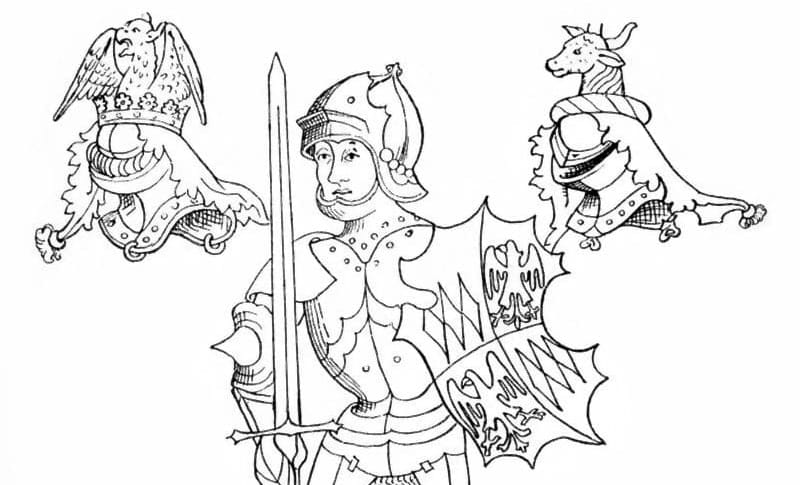
The Nobility
and their landed power
If the king was the linchpin, the nobility were the great beams of the political structure. The relation between the English king and the nobility was the backbone of the whole polity. But why did the great lords matter so much? It was mainly due to the material foundation of their power: land. The nobility was a class of educated, business-minded people who managed vast estates. Their estates followed the logic of inheritance law and population patterns rather than the fortunes of civil war. Over time, as male family lines died out, and daughters carried their inherited land into their husbands' families, land piled up in fewer and fewer hands.
Two legal tools that protected noble estates
Two legal devices kept the inheritances intact and limited the king’s power over the nobles.
- The entail: A legal arrangement that locked land to a specific line of heirs. In its most common form, entailment passed the estate down the male line only. It excluded the daughters so that the land and the family title stayed together.
- The use: This was an early type of trust. A landowner would legally hand his land to a group of trustees to hold for his benefit. This allowed him to pass land through a will, and avoided the crown taking control of the land during the landowner’s son’s minority. It protected the estate from being seized.
These two tools had significant political consequences. Entailed land could not be permanently taken by the crown even if the owner had committed treason. The future heirs’ rights remained protected. The kings had to return traitors’ lands to their heirs not out of their generosity but because of law.
At the same time, the handing over of the estate to a trust robbed the king of traditional feudal income that he otherwise enjoyed when the nobles died or left young heirs.
As these legal tools spread, the crown quietly lost a significant amount of revenue. This is among the reasons why the kings began to rely so heavily on taxation instead.
Concentration of power with a few families
Families kept failing to produce surviving male heirs. Noble houses died out in the direct male line at a steady rate. The few lucky survivors lasted from one century to the next. By 1485, the system had swung back toward primogeniture (everything passing to the eldest son). As a result, England ended up with a small, hereditary group of peers instead of a large noble class like those in the rest of Europe. Power became concentrated in a handful of enormous families such as the Nevilles, Percies, Staffords, and Bourchiers. The rivalries among these families would eventually help drive the civil wars.
Just as the king was the personal and singular source of all authority in the realm, each great lord ran his own estate like a mini-kingdom where his personal will was the final word. The one-man rule that operated at the top of the kingdom was repeated at every level below it.
The Affinity and ‘Bastard Feudalism’
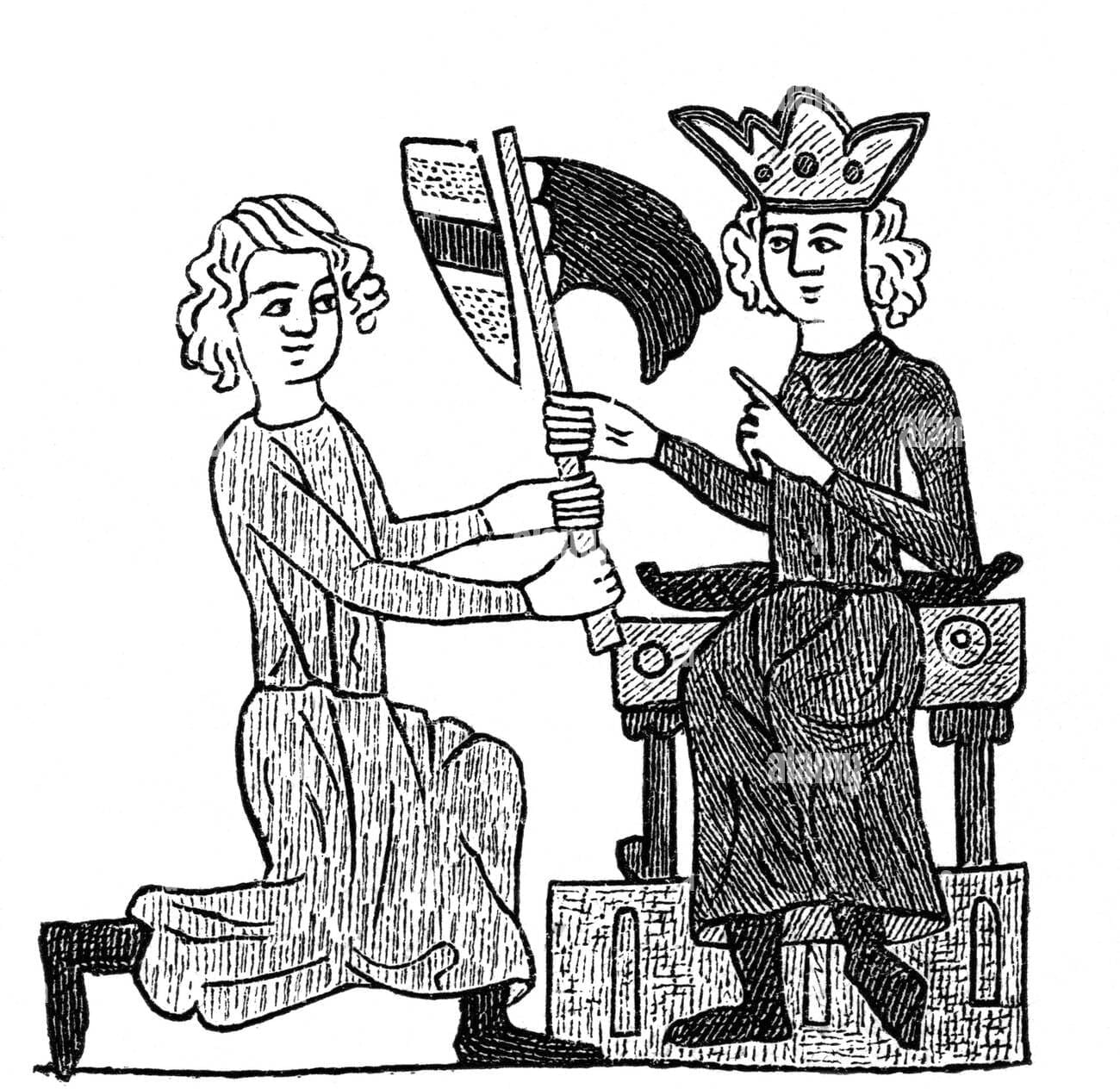
The nobles did not convert their wealth into political and military force through the old feudal system where the land was granted in exchange for military services. Instead they built a network of paid and rewarded followers known as their affinity. An affinity was the whole body of men attached to a lord: his household servants, his estate officers, and, most conspicuously, the gentry and others he retained by annual fees, grants of office, and the gift of his livery (his badge or uniform).
The system by which lords bound followers in this way, by money and 'good lordship' rather than by tenure of land, is what historians call 'bastard feudalism'. This term was coined by Revd Charles Plummer in 1885. According to him and most Victorians, paying retainers in cash rather than binding them by land was a decay of the old noble feudal loyalty. In the older “proper” feudalism, a lord granted a fief (land) to a vassal, and in turn the vassal owed the lord knight-services (military services) and his loyalty. This bond was sealed through a formal ceremony of homage and an oath of fealty where the vassal knelt, placed his hands between the lord's hands, and swore to be faithful.
Because this bond was built on land, the Victorians considered it deeper and something that was more permanent and honorable. The vassal could pass the fief to his heirs. Thus, his loyalty was rooted in something truly lasting.
In bastard feudalism, the lord bound the vassals with money, fees, offices and livery. To Plummer and the Victorians, this made the relationship more like a transaction instead of a sacred duty founded on something stable and lasting. They assumed that a bond built on cash could be bought off, switched, or hired out to the highest bidder. After all, a paid man could sell his sword to whoever paid more. They further thought that this transactional, deteriorated version of feudalism caused corruption. For them, if loyalty was for sale, then a rich lord could assemble a private force and bend the law to his will.
Historians on the term Bastard Feudalism
Kenneth Bruce McFarlane rehabilitated this Victorian notion. Both he and Michael Hicks argued that paying vassals with fees, offices, and liveries was not a degradation of feudalism, or sign of chaos, but just normal social machinery.
McFarlane focused on the indentured retainer as the defining figure or the focus of bastard feudalism.
An indentured retainer was a member of the gentry (landowning class just below the nobility). He was not a servant but a man of some status who attached himself to a greater lord. He kept his own estate and household but was bound to serve the lord when called upon. This agreement was a formal, written, and sealed contract. The term ‘indenture’ comes from the physical document in which the contract was written twice on a single parchment. It was then cut apart along an “indented” (toothed) line, and each party kept a half. The two halves could later be matched along that irregular edge to prove they were genuine.
For McFarlane, this contract-based relationship was the crux of bastard feudalism.
However, Michael Hicks differed with McFarlane. According to him, the focus was not the indentured retainers. They were just a minority but were visible because of the availability of distinct, physical contracts (proofs loved by historians). Hicks widens the definition of bastard feudalism. According to him, bastard feudalism was not just about the indentured retainers. Instead, it is about the whole range of ways a noble lord acquired the powers he needed. The only common thread being regular payments for services in various forms.
Where the indentured retainers were the heart of bastard feudalism for McFarlane, for Hicks, it was:
i. The household of the lord - the men who lived with him, and served him directly, and
ii. The armed tenantry - his ordinary tenants (people who held land from him) who would follow him to war whenever called.
Despite minor disagreements, historians McFarlane, Hicks, Carpenter, and Pollard agree that bastard feudalism was a neutral tool and system that did not cause societal chaos. Order or civil war depended on the king.
The Parliament and Royal Finance
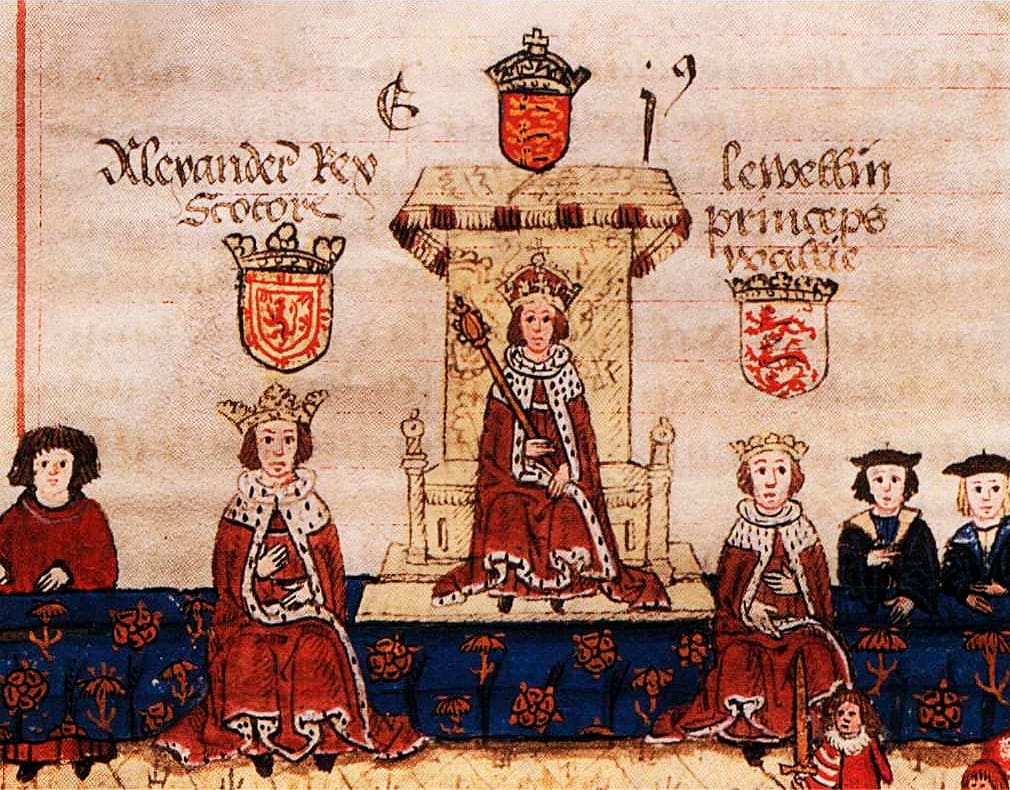
During the 15th-century, the Parliament was neither an opposition to the king nor a mere instrument of royal command. The main function of the English parliament was to reflect and represent the political nation. It provided regular exchange of views between the crown and its subjects. The parliament met often and performed three major roles:
- It made law.
- It heard the petitions and grievances of the realm, acting as the conscience of the realm, and
- It granted taxation. This was its most powerful function.
The royal finances
The finances were not just a technicality. In fact, they were why the fifteenth century crown was so often in difficulty. Between around 1290 and 1340, England had become a ‘tax state’, shifting from a monarchy that lived mainly off its own land and feudal rights, to one funded by national taxation. There were two major streams of tax revenue:
- Indirect taxation on wool exports: The export of raw wool and woolfells was among the most lucrative sources of royal revenue in the 15th-century. However, as the raw wool exports collapsed, and the English cloth replaced them (cloth was taxed very lightly), this revenue drastically decreased, from being 70,000 pounds a year in the 1360s and 1370s, to less than 30,000 pounds after 1430.
- Direct taxation: This was tax on people's movable property (their goods, not their land), collected as a standard package called the "fifteenth and tenth." This was a fixed grant worth about £37,500, and people saw it as the easiest and least painful tax to pay. It is important to note that direct taxation could only be granted by the parliament, exclusively for a recognised necessity like war. In the case of direct taxation, the king had to ask the parliament for its approval for every grant.
During the time of peace, the king was expected to not depend on taxes and sustain himself from his everyday revenues such as his own land revenues and rights.
This left the crown in perpetual financial crisis because the math simply did not work. A single six-month military expedition to France could cost more than an entire tax subsidy. And even the ordinary costs of defending Calais and the northern borders (the "marches") ran into tens of thousands of pounds a year.
The crown lived in a state of chronic, structural insolvency. To survive and cope it had to:
- Borrow
- run up huge arrears (unpaid debts), and
- pay creditors in "tallies of assignment" (notched wooden sticks that promised payment later out of some named future revenue stream).
Because the king could only tax with parliament's approval, and only really for war, while his costs vastly outran his ordinary income, the crown was locked into permanent financial dependence on parliament. This gave the parliament real leverage, and made the government a genuinely two-way relationship. The politically active classes (nobles, gentry, townsmen) didn't merely submit to the government. They staffed it, funded it, and used it for their own purposes. The government literally couldn't function without their consent and participation.
Thus, the government wasn't just something imposed downward by the king onto passive subjects. It grew as much from below as it did from above.
Limits of Royal Power
Justice, Punishment and Disorder
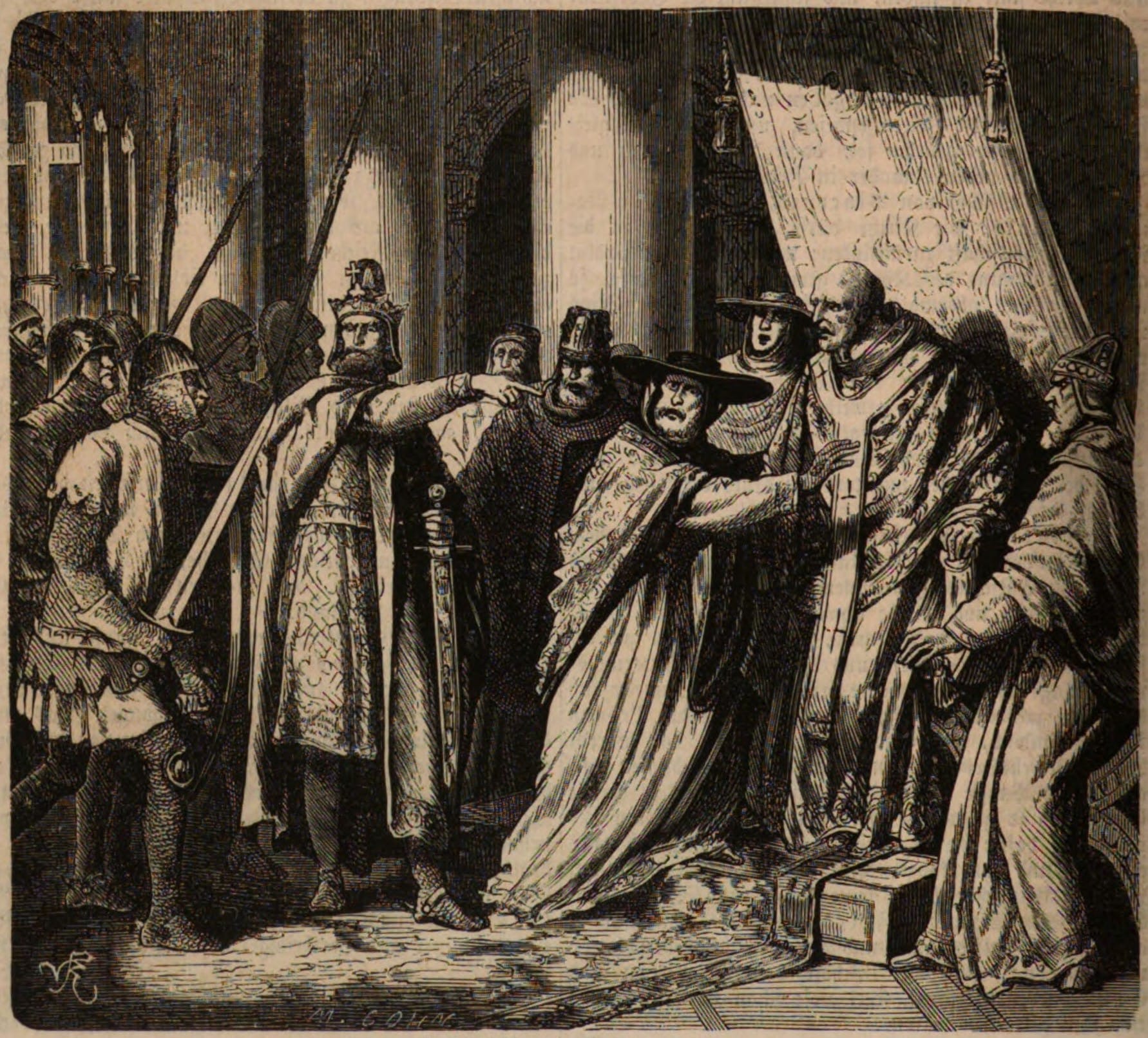
Historian Edward Powell argues that the clearest way to see how power was really distributed is to look at the law. This is because the medieval political authority was expressed mainly as the right to hold courts and pass judgement. Whoever controlled the courts, held real power.
Limitations of the crown
The medieval crown lacked the basic tools of enforcement such as:
- A standing army,
- A police force, and
- A public prosecutor.
Thus, the royal justice was reactive, not active. The king's government didn't go out hunting for criminals. Instead, catching offenders was left to the victim and the local community, and the courts relied on private accusers (individuals bringing cases themselves) and local juries. The king couldn't physically force his subjects into order. He could only lead, arbitrate, and cooperate with the people who controlled the manpower.
Interestingly, Powell also breaks the popular notion that 15th-century England looks both well governed and lawless. He points out that this was not because the society was collapsing. Instead, it was because the royal justice was expanding. This means that more offences were being drawn into the king’s courts, which led to more crimes and disorder getting recorded. This happened because:
- Wider jurisdiction: The crown claimed authority over more types of crimes and offences. More actions and behaviours counted as the king’s business.
- More royal officials in the localities: Justices of peace and commissions pushed justice into counties. Thus, they heard more cases.
- Increasing number of records: There was an increase in documentation. This made disorders and crimes more visible to historians.
- Demand from below: The people chose to bring their disputes into royal courts.
Justice worked by negotiation, not punishment
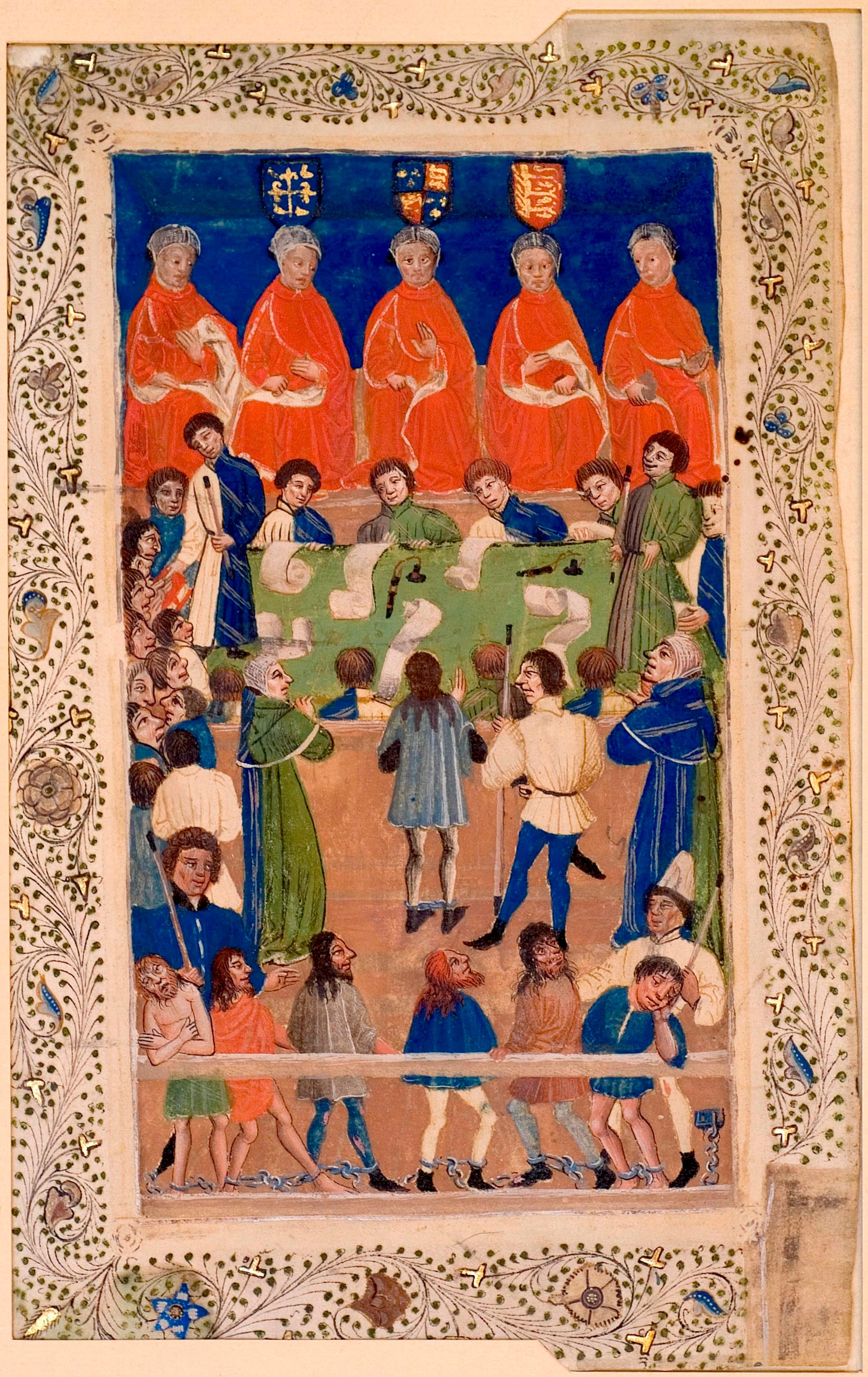

In 15th-century England, justice was not about punishment but reconciliation. For example, during Henry V’s reign, pardons were granted in huge numbers. But this was not because of some weakness or laxity. It was a deliberate conciliatory strategy. Pardoning offenders reconciled them to the crown and funnelled them into war in France (by turning potential troublemakers into soldiers).
Thus, Powell points out that justice was “a co-operative enterprise involving the king and his people, a continuous dialogue between central authority and local autonomy.”
Disorder in the 15th-century England
McFarlane points out that disorder during this period did not involve armed men storming into the courtroom. It was something quieter. Men had found safer, better ways to pervert the law than to break it. There existed subtler corruption of the legal system such as bent sheriffs and juries, and the prevalence of ‘maintenance’ (improperly backing another person’s lawsuit and lending your weight to their case), 'embracery' (bribing jurors), and ‘champerty’ (funding or supporting a lawsuit in exchange for a share of the final money won).
Order and the English King
Historian Edward Powell points out that order within the society depended upon the king’s personal authority, and not on institutions. Thus, it was very fragile. Henry V was successful at maintaining law and order in his kingdom due to his efficiency and capability as a ruler. However, he did not make any lasting institutional reforms. Therefore, the very same issues and feuds he had suppressed during his rule revived within months of his death in 1422.
Institutions could not save a realm led by an incompetent man.
Things to Remember
Quick recap.
- Fifteenth century England was a personal monarchy. The government was an extension of the king’s own will. The kingdom’s fortunes depended entirely on the ability of the man on the throne.
- Even though the king was sovereign, he was not arbitrary. His office fused a private man with the public realm, and bound him from within to serve the common good.
- Thus, it was also a mixed monarchy. Authority balanced both theocratic and representational power.
- A good king was expected to take counsel, but ultimately, he ruled by his own will. A council could execute royal authority but never possess it.
- The bond between the king and the nobles was the backbone of polity. By 1485, power had swung back to primogeniture (the system where the eldest son inherits all the property when their father dies), and concentrated in a few great families (Nevilles, Percies, Staffords, Bourchiers) whose rivalries helped drive the civil wars.
- Lords turned wealth into power through their affinity. Vassals were now retained by the lords through fees, office, and livery instead of land. This was called bastard feudalism.
- Parliament was neither an opposition to the king nor a mere instrument of royal command. It made laws, acted as the conscience of the nation, and granted taxation.
- As far as the finances were concerned, the king depended on direct and indirect taxes.
- The revenues through indirect taxes levied on wool decreased, and the direct taxes were exclusively granted by the Parliament, that too, only during emergencies like war. At the time of peace, the king was expected to manage on his own.
- 15th-century England is notorious for being disorderly. However, this is not because there were more feuds and crimes than before. It was because royal justice was expanding, and an increasing number of people now relied on royal justice.
- Even though the king was all-powerful, he did not control through punishments. Justice was not about punishment but reconciliation, and it was a deliberate conciliatory strategy.
- Finally, social order majorly depended on the capability of the king, and not on institutions. No institution could save the kingdom from an incompetent king.
References
Harriss, Gerald. Shaping the Nation: England, 1360-1461. Clarendon Press, 2005. The New Oxford History of England.
Hicks, Michael. Bastard Feudalism. Longman, 1995.
McFarlane, K. B. The Nobility of Later Medieval England: The Ford Lectures for 1953 and Related Studies. Clarendon Press, 1973
Powell, Edward. Kingship, Law, and Society: Criminal Justice in the Reign of Henry V. Clarendon Press, 1989.
Watts, John. Henry VI and the Politics of Kingship. Cambridge University Press, 1996.
Read More...
 Pallavi Singh
 Pallavi Singh
 Pallavi Singh
 Pallavi Singh
 Pallavi Singh